
The Desk Worker's Guide to Sciatica
Sciatica is quite literally a pain in the bottom and the lower back, and often the legs too. It’s more common than you might think. Back pain costs the UK economy £10 billion every year, with around 30% of adults experiencing lower back pain in any given month.
Over the years, working with desk workers through the Move At Your Desk Method™, I’ve helped a lot of people manage and overcome sciatica, and the same patterns come up again and again. Lately I’m seeing it more and more in people who are constantly lugging laptops between home and the office, and in pregnant desk workers whose centre of gravity is shifting while they’re still putting in a full day at a screen.
So what actually is sciatica?
The sciatic nerve is the longest and widest nerve in the body. It starts in the lower back, runs through the bottom, and travels down the back of each leg all the way to the foot. When this nerve gets compressed or irritated, either by a disc in the spine or by a tight muscle in the bottom (most commonly the piriformis), you get pain, tingling, numbness or a burning sensation anywhere along that pathway.
It can show up as lower back pain, an ache in the glute area, shooting pain down the leg, or all of the above at once. Not fun.
If You Have Sciatica And You’re At A Desk…
Get up regularly: roughly every 30 minutes and shake your legs out when you do. Staying static is not your friend here.
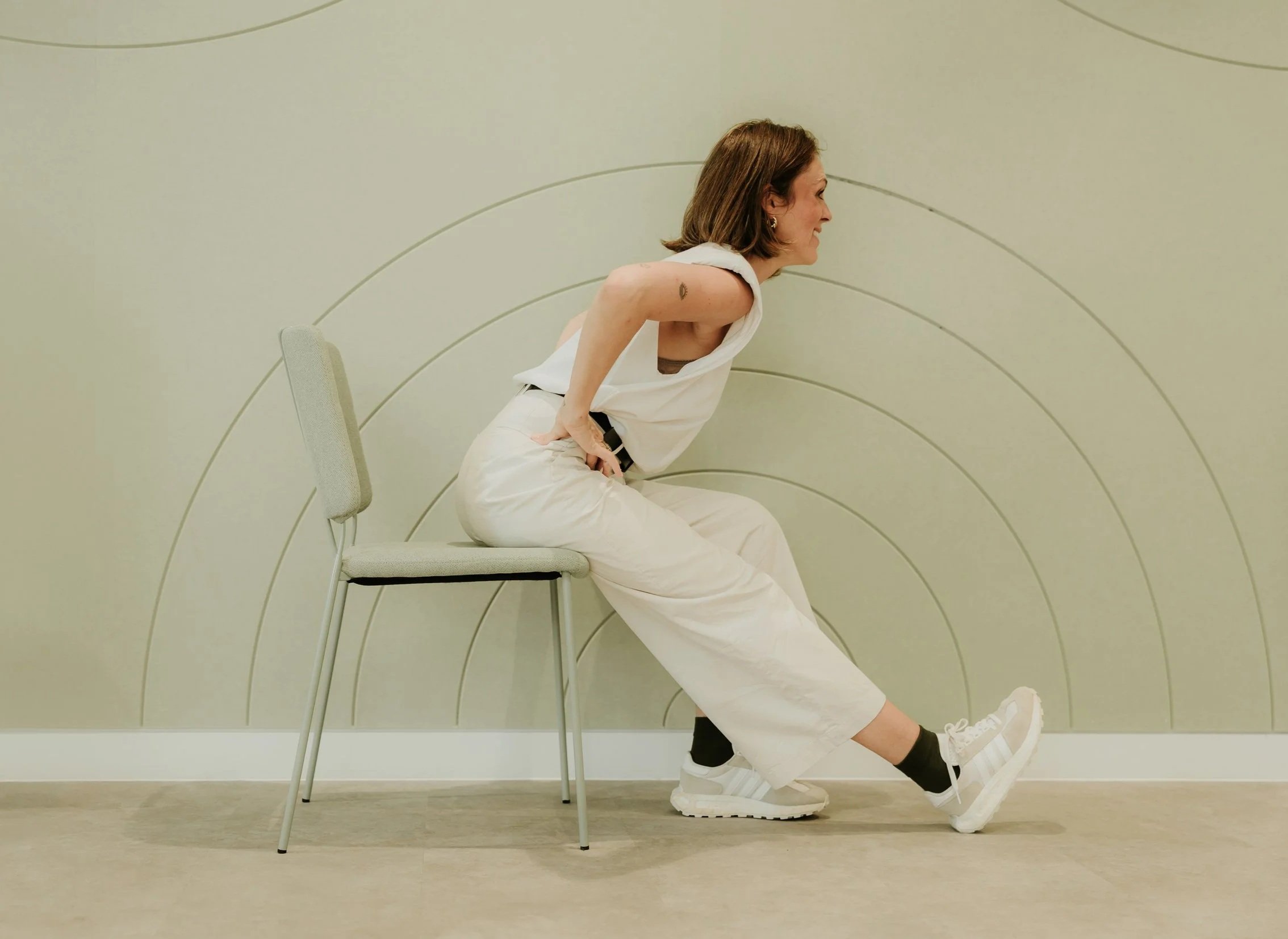
Chair squats are a good idea: hinge forward from your hips, press down through your heels and stand up, then sit back with control and repeat a few times.
How you sit matters: sit up on your sit bones rather than slumping back onto your sacrum (pelvis tilted under), keep your legs in parallel where possible and try to avoid crossing your legs, as this can directly aggravate the sciatic nerve.
Make sure your knees are tracking level with each other when you sit: rather than one dropping out to the side or more forward than the other, this helps keep the hips level.
Move your legs around while you’re seated: take your feet a little wider, lift your heels, roll your knees in and roll them out. Small movements, but they help keep the hips and the sciatic nerve from getting grumpy.
Move your spine too: side bending and rotation are both particularly good for sciatica, so weave them in when you can.
Posterior tilts seated are worth adding in: they mobilise the lower back and pelvis without putting any load through the nerve. Initiate the movement from the sit bones!
If It’s A Piriformis Issue
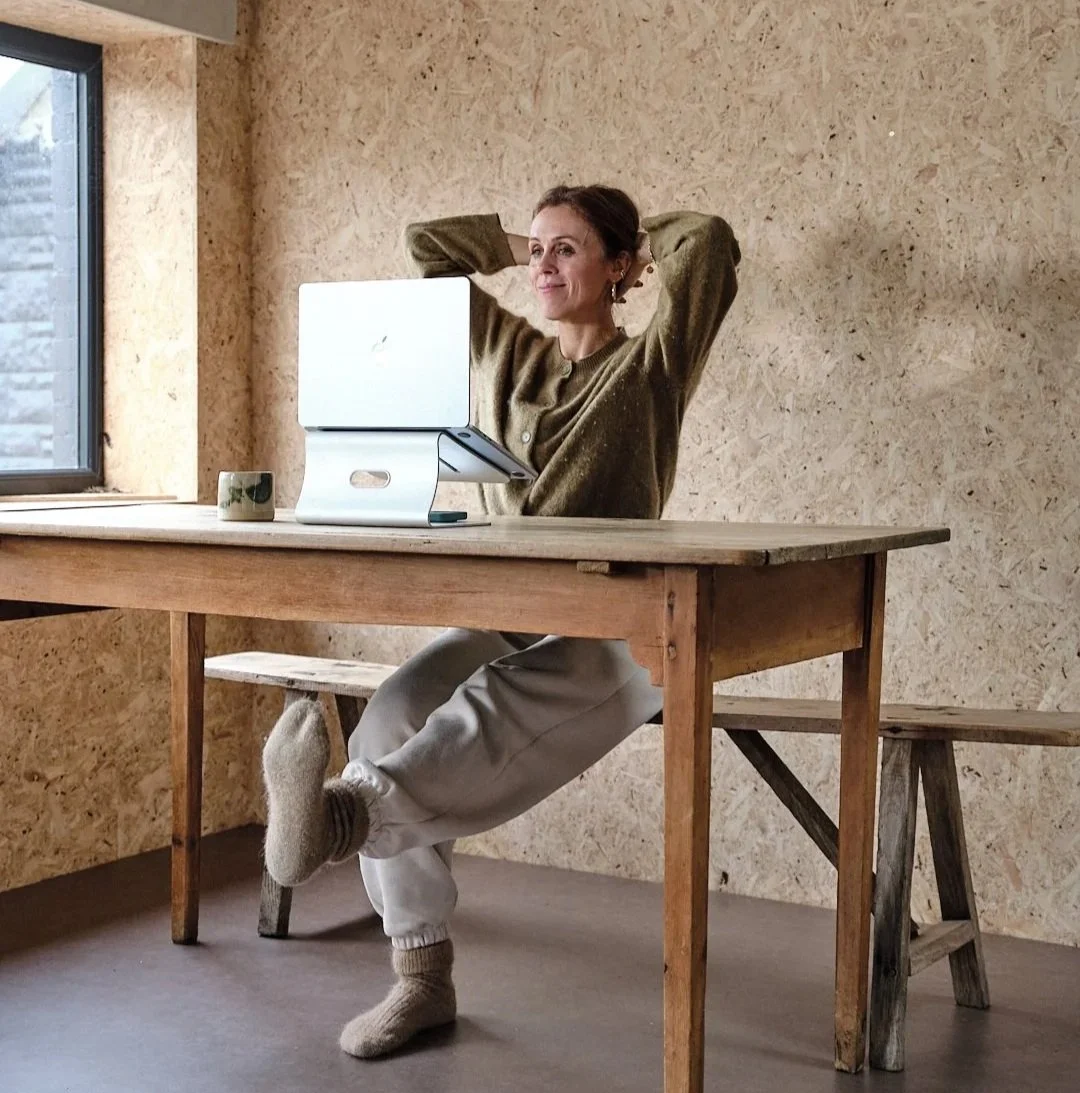
A seated figure-four stretch can be really helpful if your sciatica is piriformis-related and the piriformis is tight. Cross one ankle over the opposite knee, sit evenly on both sit bones and hinge forward from the middle, keeping yourself straight rather than veering off to one side. Do both sides if you need to.
What About Nerve Flossing?
Nerve flossing, sometimes called neural gliding, is a technique that gently mobilises the sciatic nerve along its full length to reduce tension and improve how it moves through the surrounding tissue. Done well, it can be really effective for sciatica.
That said, if you’re in an acute flare, go carefully. Nerve flossing can aggravate symptoms if the nerve is very inflamed or if the technique is too aggressive, so it’s worth getting guidance from a physio or movement specialist before you go all in - rather than finding a YouTube video and going for it.

How To Avoid Aggravating Sciatica
Watch your standing habits. Repetitive leaning onto one hip when you’re standing at a desk or counter is something I see constantly, and it’s a major contributor to sciatic irritation. Try to stand more evenly.
Ease up on bottom clenching. Habitually squeezing your glutes can overwork the piriformis, and in my experience this is one of the most overlooked causes of sciatic pain.
Relax your jaw. There’s a well-documented connection between jaw tension and the pelvic floor via the deep front fascial line (a network of connective tissue running from the soles of the feet all the way up to the jaw) which means chronic jaw clenching can have a downstream effect you wouldn’t necessarily expect.
Focus your movement on flexibility, strength and balance together rather than just stretching and hoping for the best. All three matter, and that combination is exactly what I build into the work I do with desk workers every day.

Above all else (and to reiterate) as a first step, if you think you have symptoms, please seek medical advice first.
Hopefully this helps!