About Kerrie-Anne Bradley
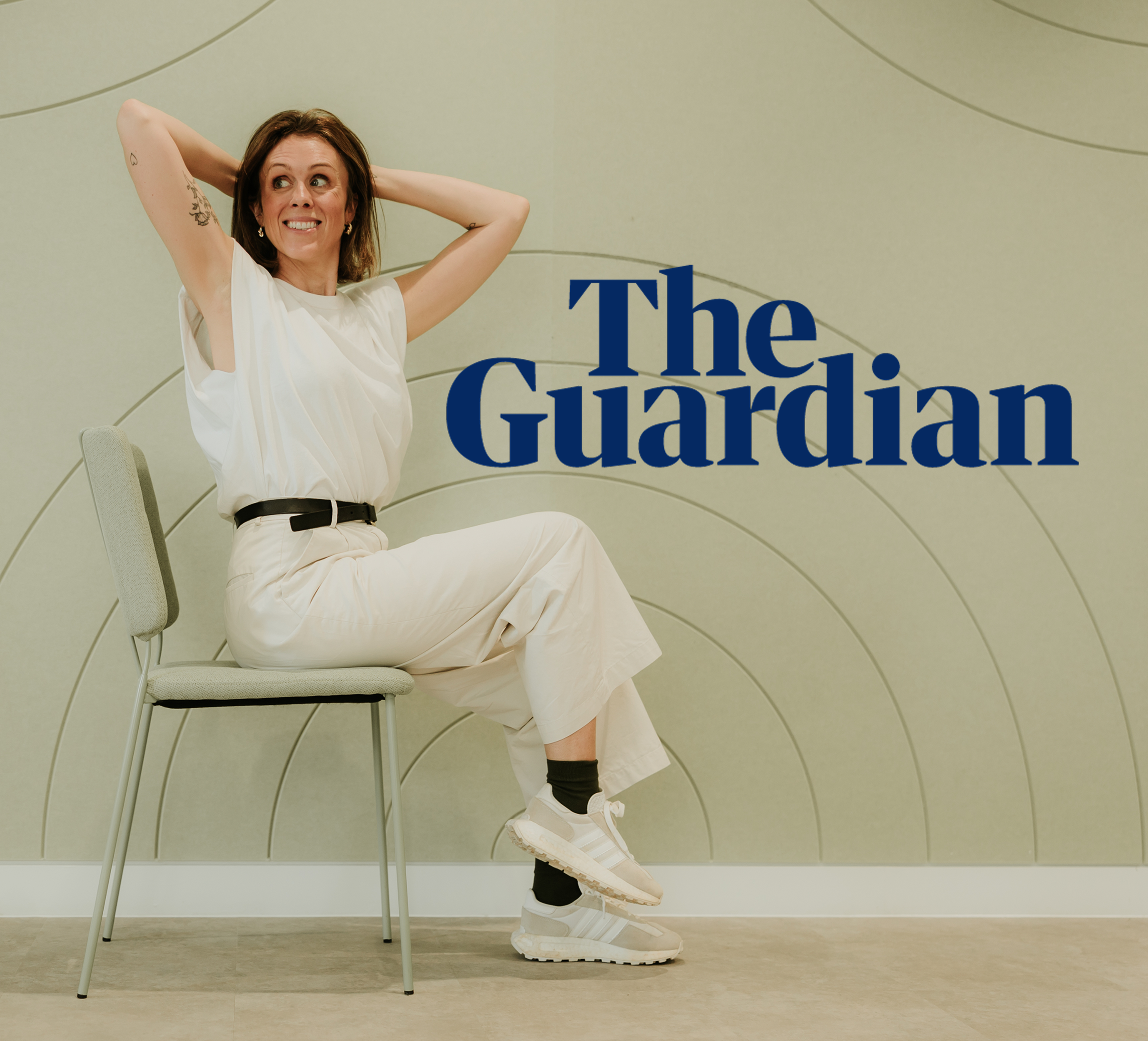
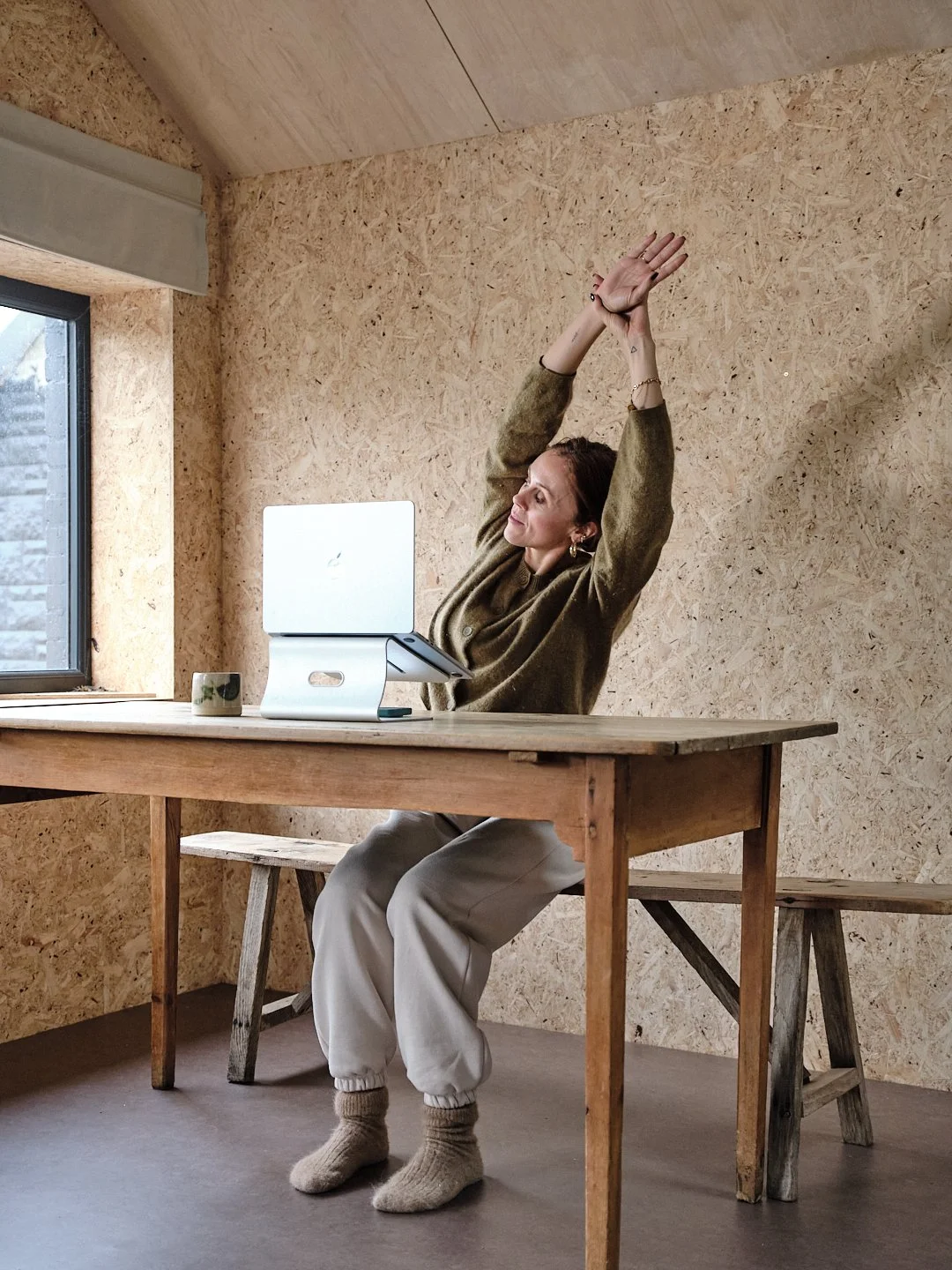
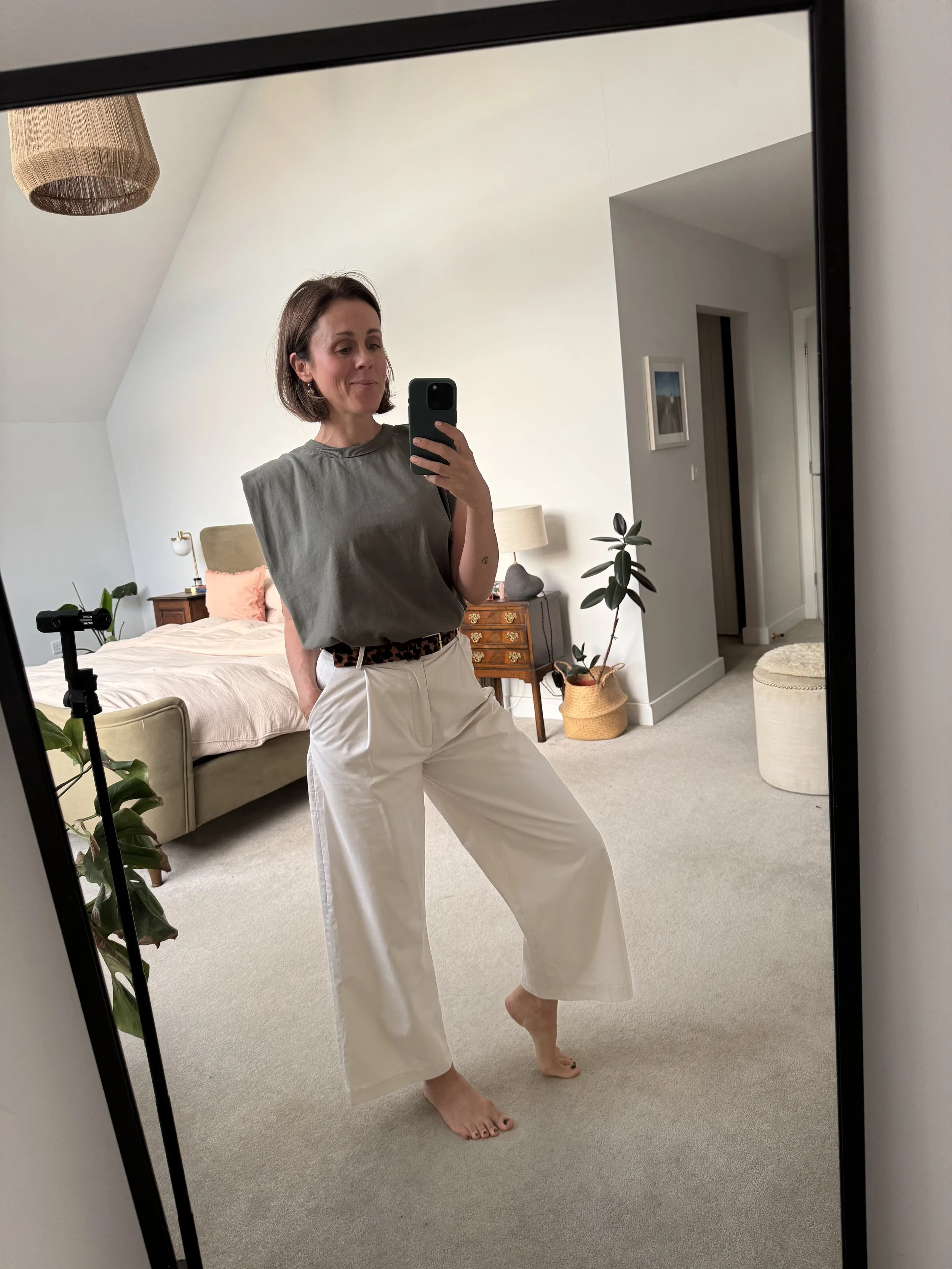
Hi, I'm Kerrie-Anne Bradley. Author of Move More At Your Desk, former economist, Pilates teacher, and the person who pioneered desk-based movement before it had a name.
For nearly a decade I sat at a desk like most of my clients do now. Scoliosis, chronic neck pain, sciatica, and a shopping list of other aches I'd accepted as the price of a busy working life. I worked all the hours, I was permanently exhausted, and I was so disconnected from my own body that I didn't know where the pain was coming from or what to do about it. I was forever holding my body in wonky positions (think Pretzel meets croissant!) but I had no idea of the impact this was having on my body, energy and mind.
Then the owner of a Pilates studio sweet-talked me into joining a Pilates training programme and my life changed completely — although not immediately, and not gracefully. Movement didn't come naturally to me. I had the body awareness of someone who'd spent ten years ignoring their body, which is to say almost none. But I had an analytical mind, and I did what economists do: I broke it all down, took an incremental approach, and slowly, methodically started to understand how my body actually worked.
What I discovered was that I'd been collecting knowledge about bodies for years without realising it. When I started working with people I found I already knew things, an intuitive understanding of how people hold tension, where pain actually comes from, what small adjustments make the biggest difference.
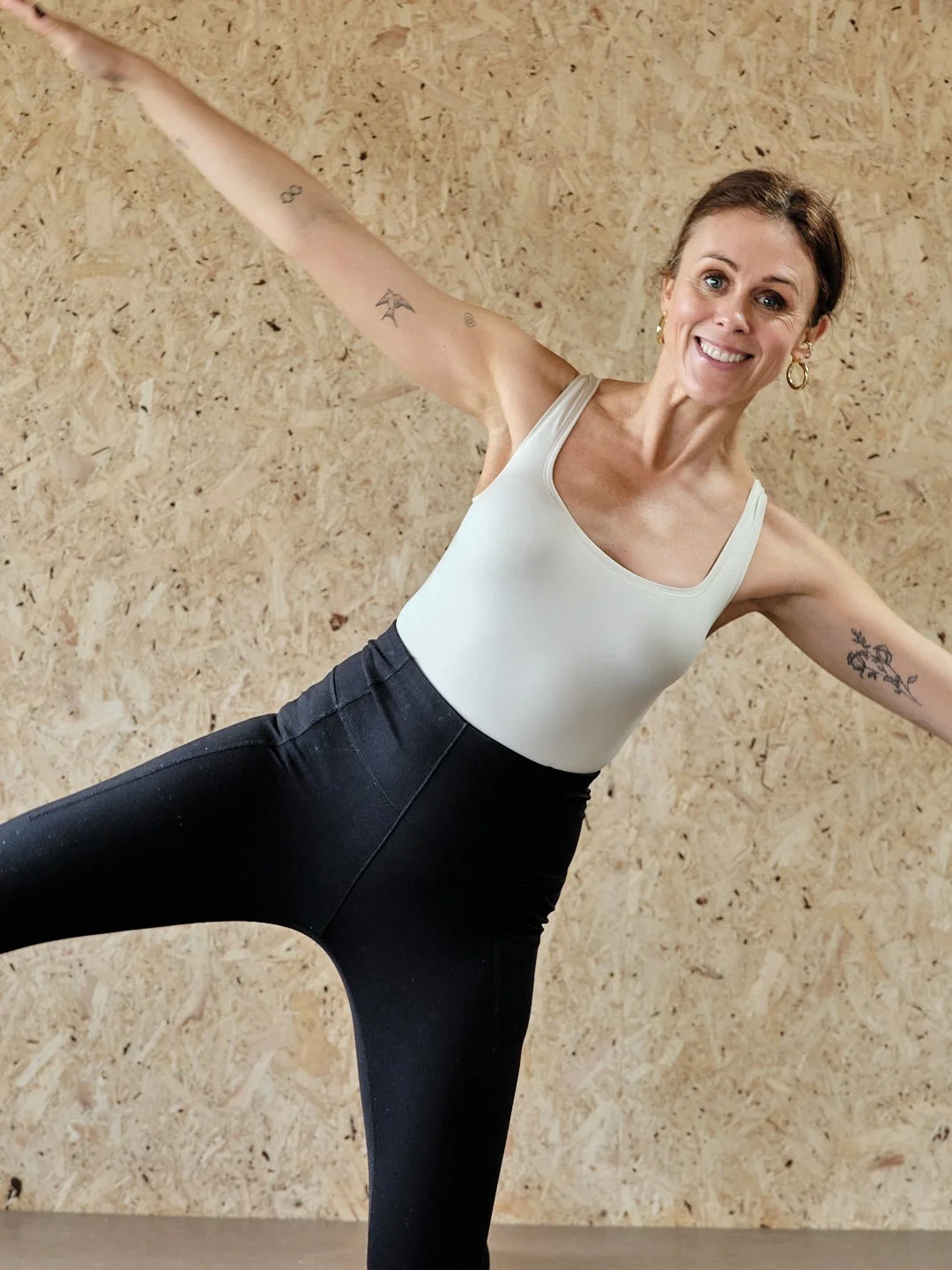
I formally trained with Fletcher Pilates and became a comprehensively trained Pilates teacher.
I also studied anatomy and movement in depth after I qualified with the most amazing mentor, Sarah Woodhouse. I did a further Pilates mentorship with Julie Driver, an advanced Fletcher Pilates teaching course, and somatic-based mentorship with Allie Green.
I’ve worked with all kinds of people: those recovering from hip, shoulder and spinal surgery, disc injuries, hyper-mobility, arthritis, scoliosis, and many other conditions that affect how someone moves.
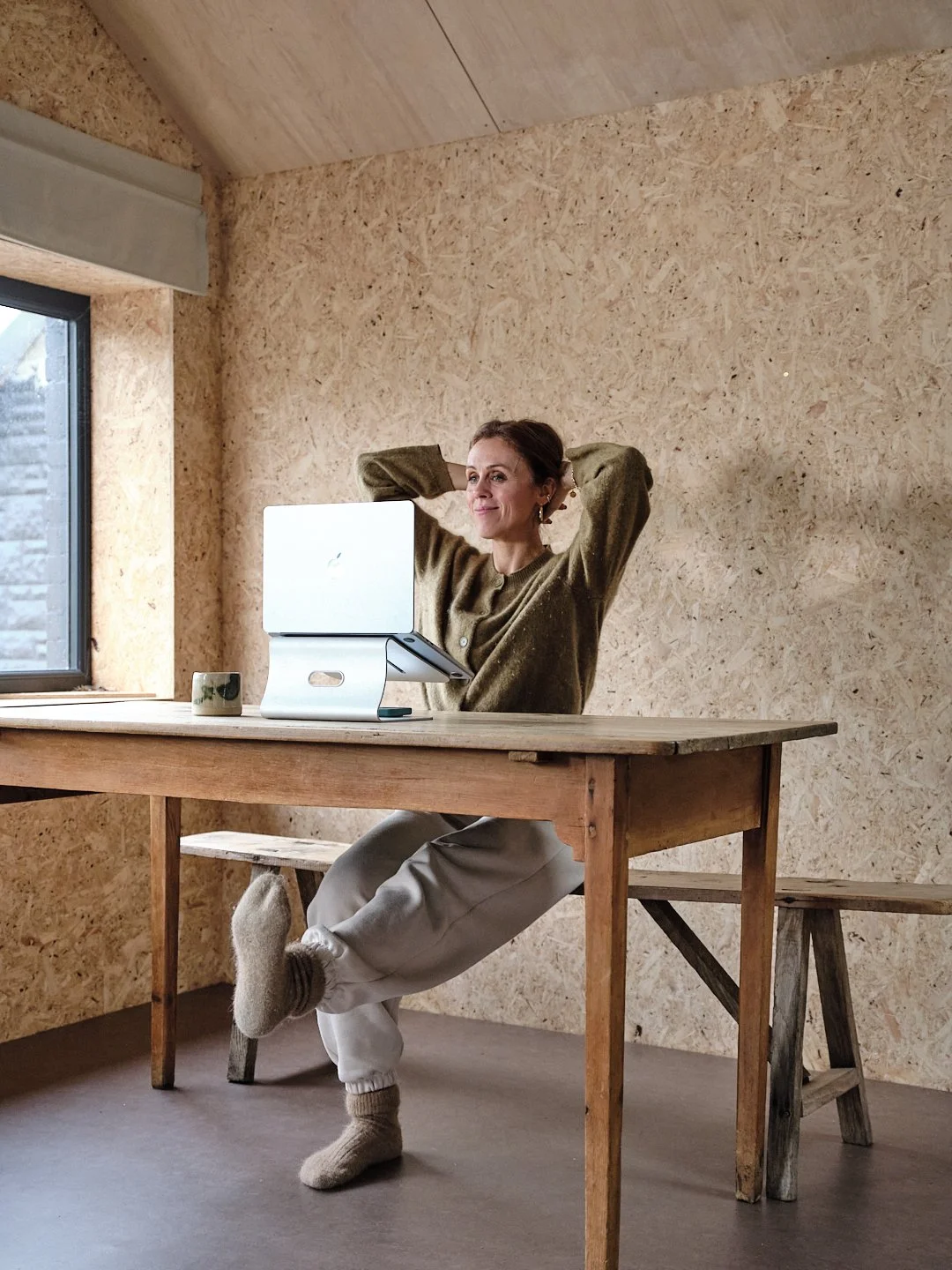
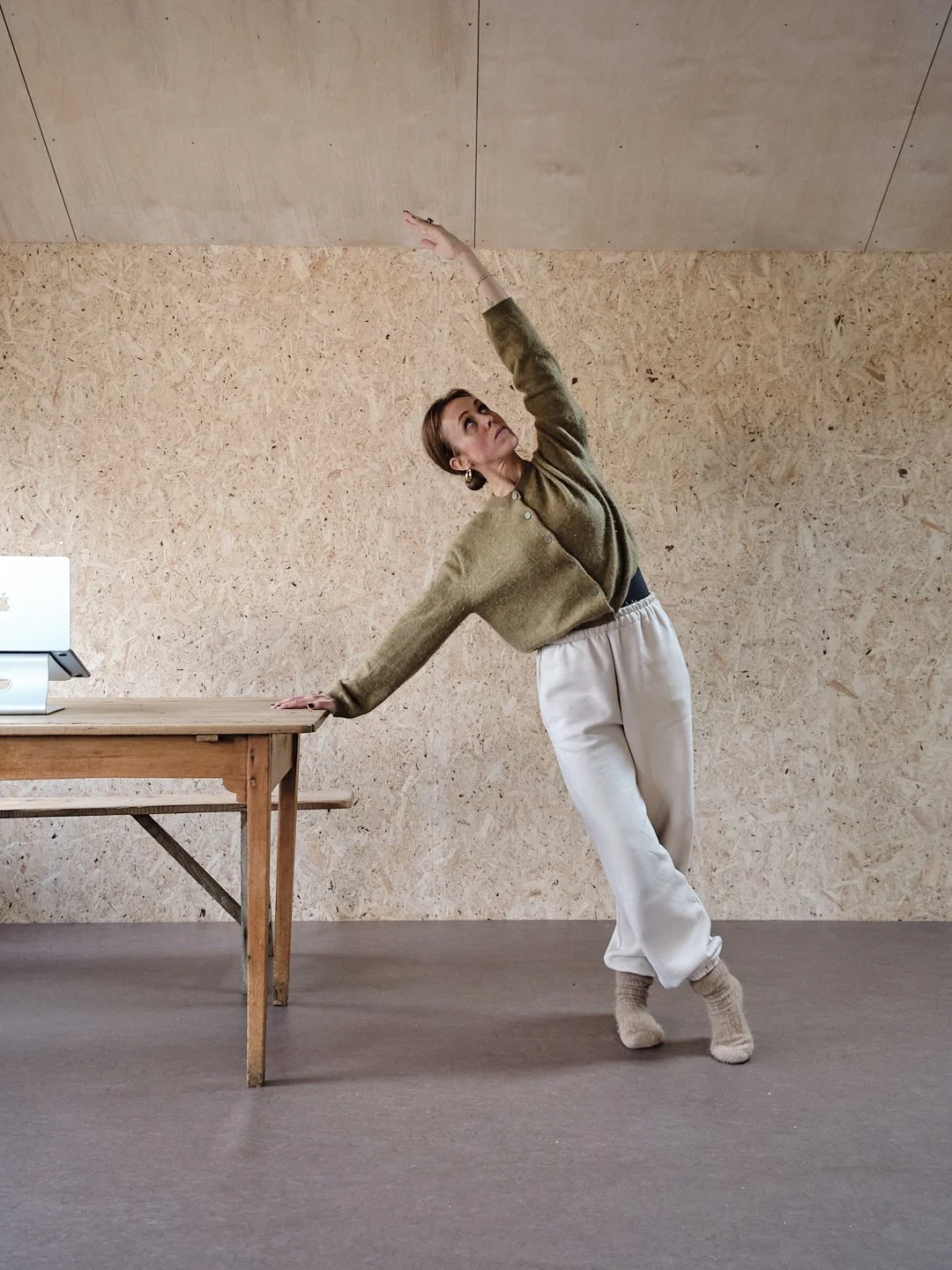
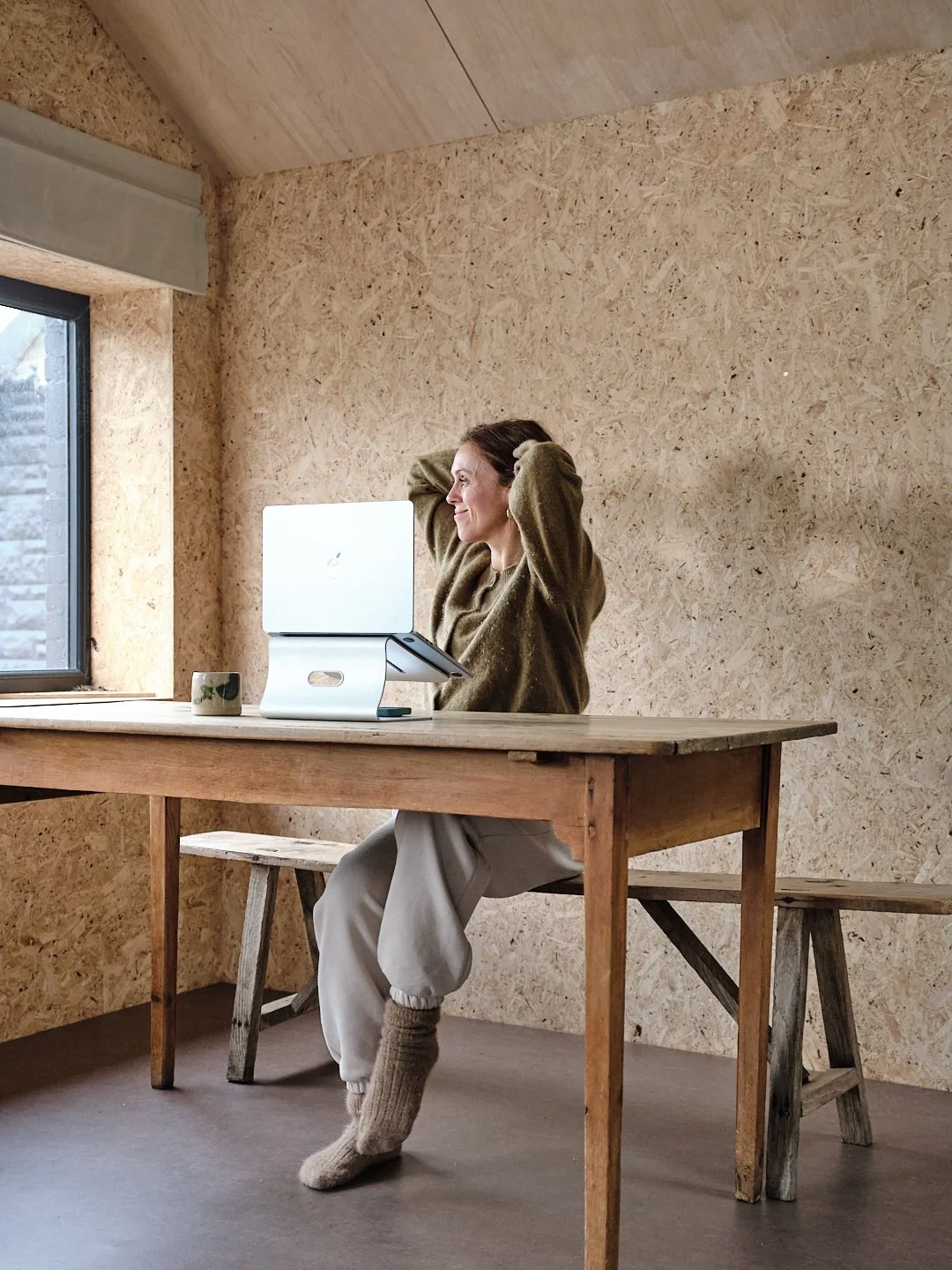
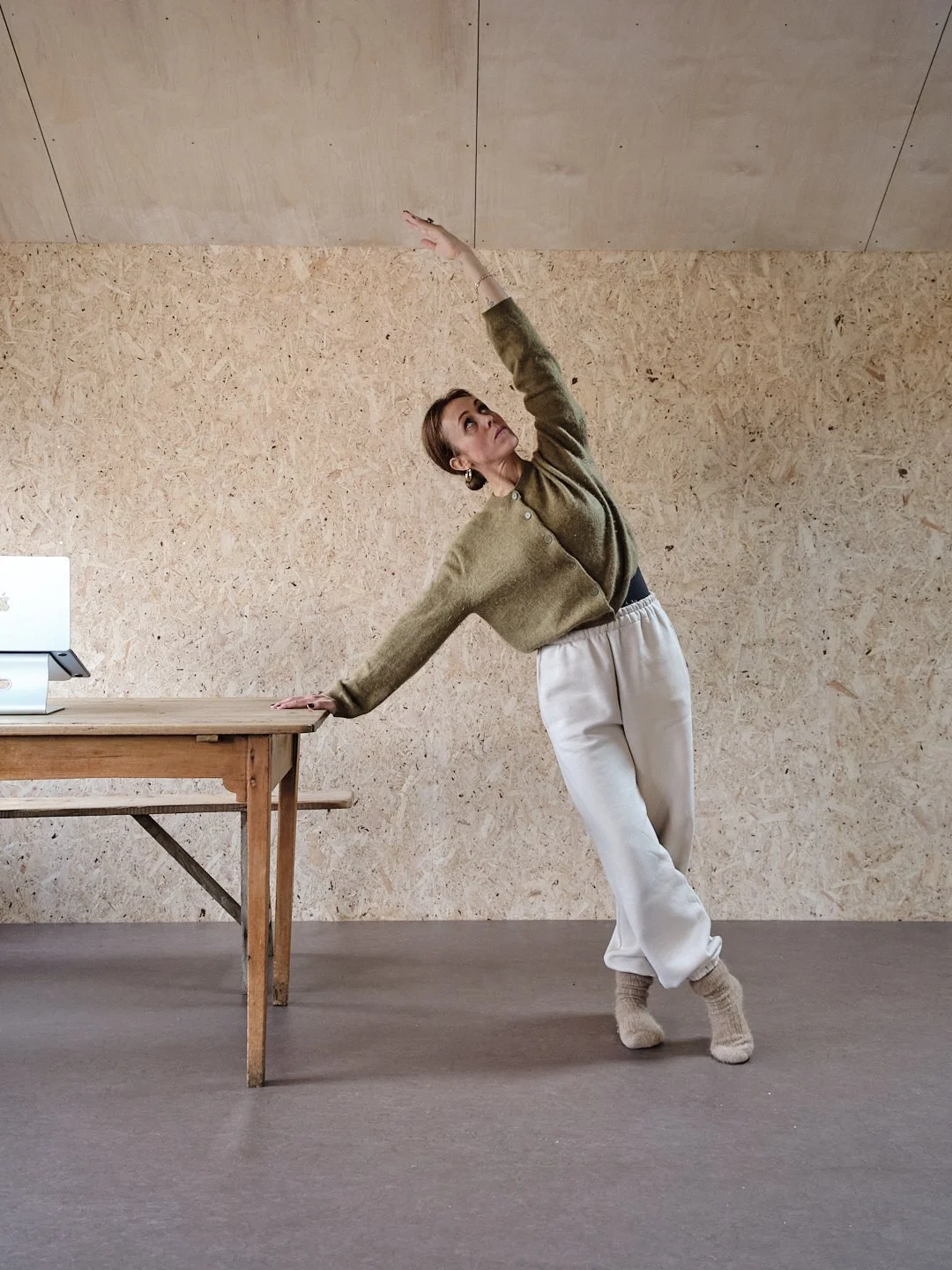
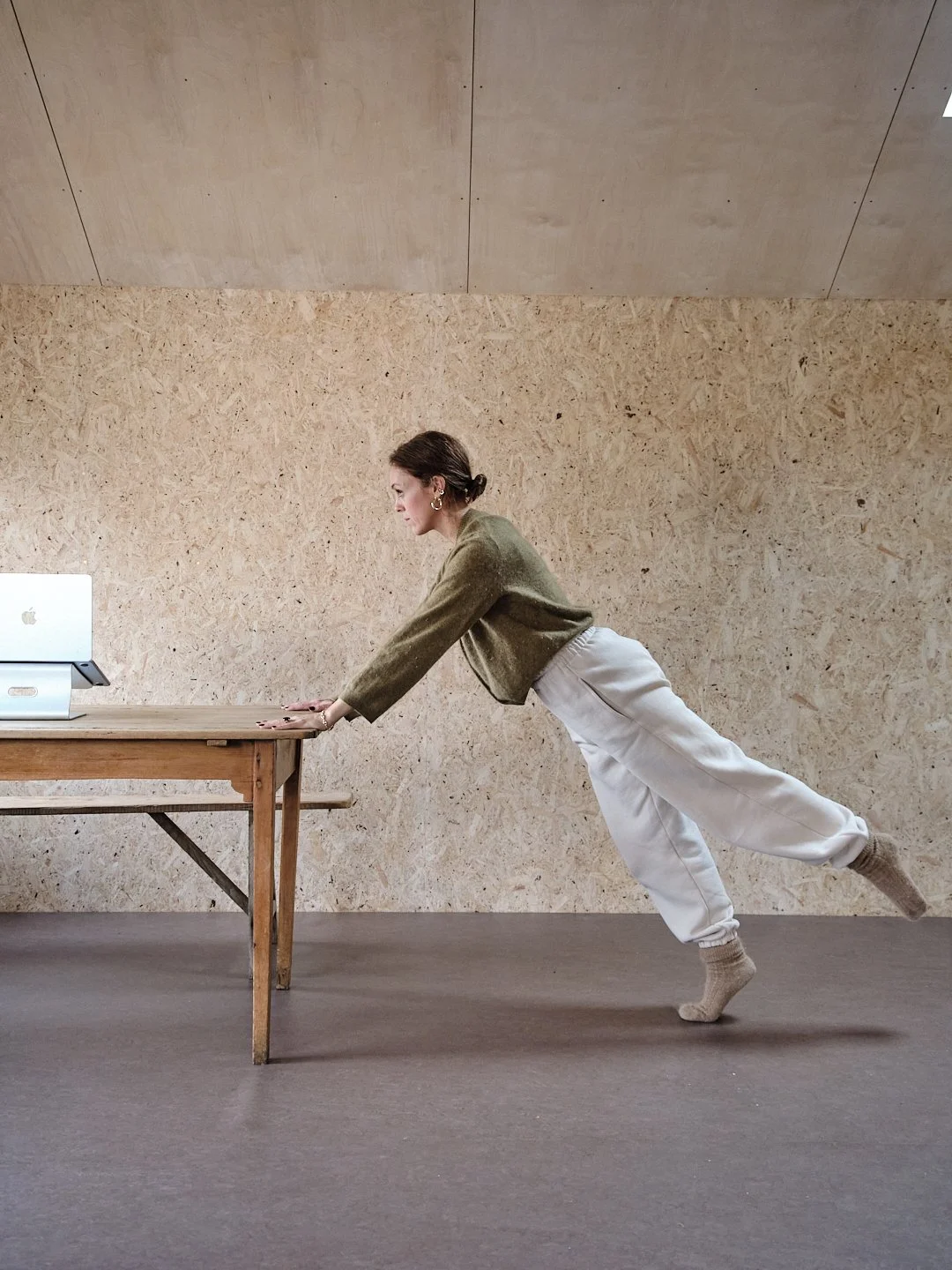
What I noticed very early on was that most of my clients were desk workers. They'd leave our lessons feeling better, and then spend the rest of the week undoing it at their desks. So a couple of years into teaching I started Pilates At Your Desk — a way of helping them on a more consistent basis, not just when they happened to be in a room with me.
That became the Move At Your Desk Method™.
The Move At Your Desk Method™
Over the years what I teach has become a named, structured method — grounded in Pilates, posture, breathwork and behavioural science, and designed specifically around how desk workers actually live and move. Not how they should live ideally, or how they might if they had more time, but how they actually do.
The Move At Your Desk Method™ works because it starts with body awareness rather than exercises. Most people have been given stretches before they've been given an explanation. They do them for a week, nothing changes, and they give up. I teach people to understand what their body is doing and why — and from that understanding, movement becomes something that actually sticks.
I wrote the book on it. Literally — Move More At Your Desk was published by Watkins Publishing and is used by HR teams, occupational health leads, physios, and desk workers across the UK who want something practical.

Who I work with
One method. Three quite different groups of people.
Desk workers and individuals — people who come to me with years of back pain, a stiff neck they've been managing with ibuprofen, or a body they've stopped trusting since an injury. They join the membership or we work 1:1, and over time they stop just managing and start actually understanding what's going on.
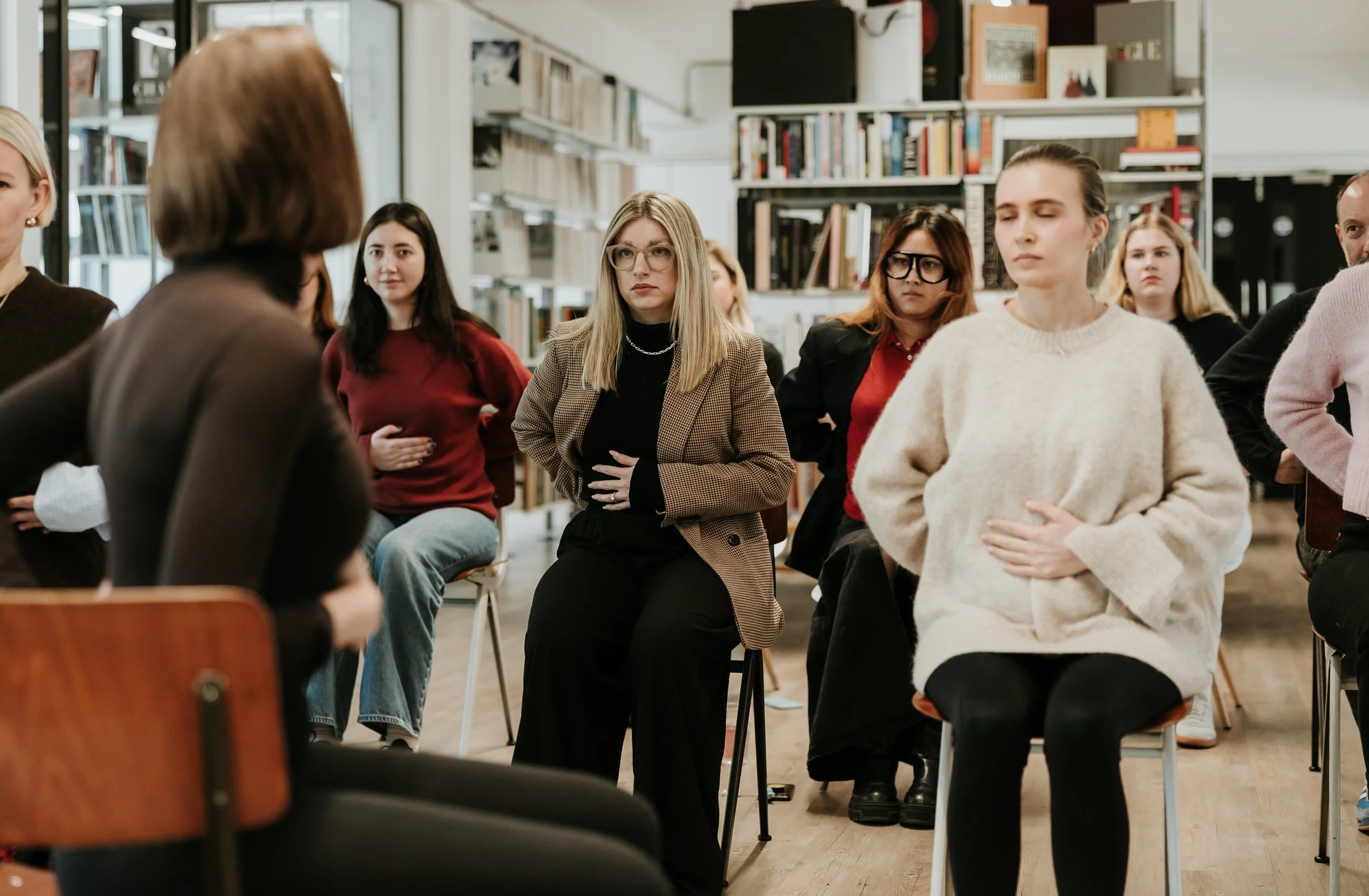
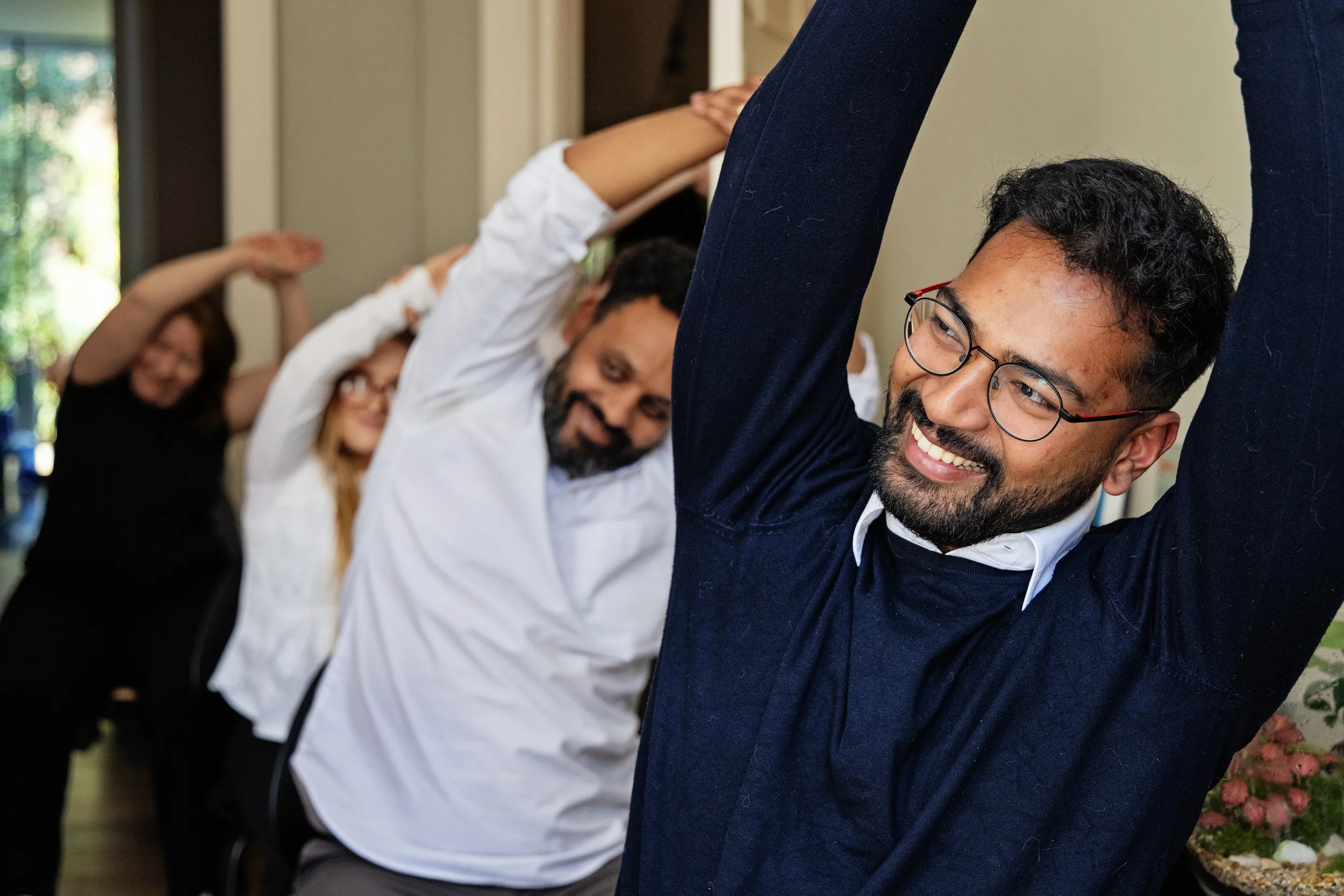
Organisations — from law firms and financial services companies to NHS trusts, tech businesses, and marketing and PR agencies. The work ranges from a single Back to Better workshop to a full three-month structured programme with measurable outcomes. Google, the Bank of England, the FCA, PayPal, Bird & Bird, Modus BPCM, WWF, and Moorfields NHS are among the organisations I've worked with.
Pilates and movement teachers who've hit the ceiling of the studio model and want to take their expertise into corporate and workplace settings. The Move At Your Desk Method™ teacher training is a 12-week group programme for qualified teachers who want a specialism that opens completely different doors.
How I work
I'm not interested in movement as performance or aesthetics. I'm interested in movement as something that makes people feel better in their bodies, doing their actual lives.
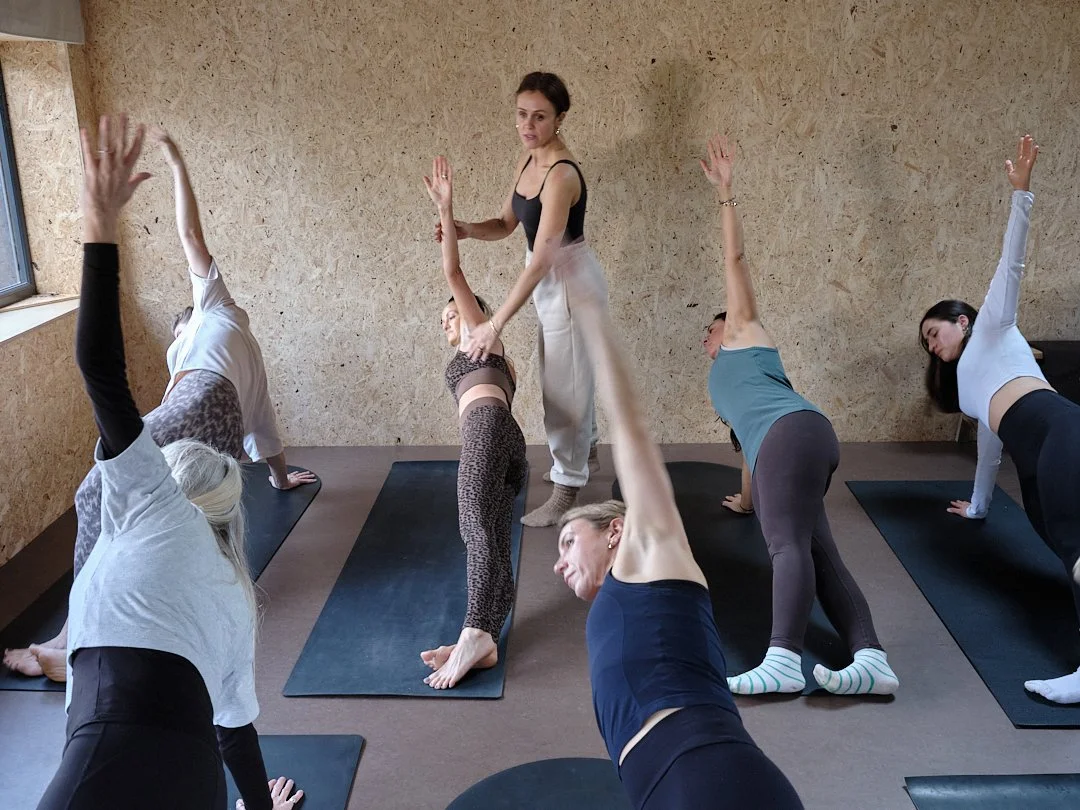
Every session — whether it's a corporate workshop for 200 people or a live online class with 15 members — is built around the same principle: understand what your body is doing, give it what it needs, notice the difference, repeat. That's the Move At Your Desk Method™ in its simplest form.
I'm told I'm good at explaining things in a way that makes sense. I spot things others miss. And I genuinely care whether it works — which is probably why I still give personal cues and feedback in every live class, even after all this time.
Where we have been featured
-
![The logo of The Sunday Times, featuring a crest with a lion, a crown, a cross, and a lion holding a sword, above the newspaper's name in bold uppercase font.]()
Lockdown may be taking a toll on your body but help is at hand. Kerrie-Anne Bradley shares her simple tips and tricks for easing pains.
Alice Kemp-Habib, The Sunday Times
-
![A red and white 18-wheeler semi-truck driving on an empty highway with a clear blue sky.]()
Achievable and sustainable even while working. These movement 'snacks' even seemed to improve my ability to concentrate on tasks and be productive in bursts between movement!
Madeleine Howell, The Telegraph
-
![A close-up of a smartphone displaying a photo of a man holding a golf club.]()
Spurred on by her clients' office desk-related ailments, Pilates teacher Kerrie-Anne Bradley created Pilates At Your Desk, a programme that applies the method's principles to when you're sitting down.
HELLO!
-
![Silhouette of a person with their arm raised holding a trophy, standing on a pedestal with a city skyline in the background.]()
How to switch up your exercise regime in your 40s: we spoke to Kerrie-Anne Bradley who revealed some simple, practical tips to consider to keep on top of your fitness.
Sarah Ilston, Red Online




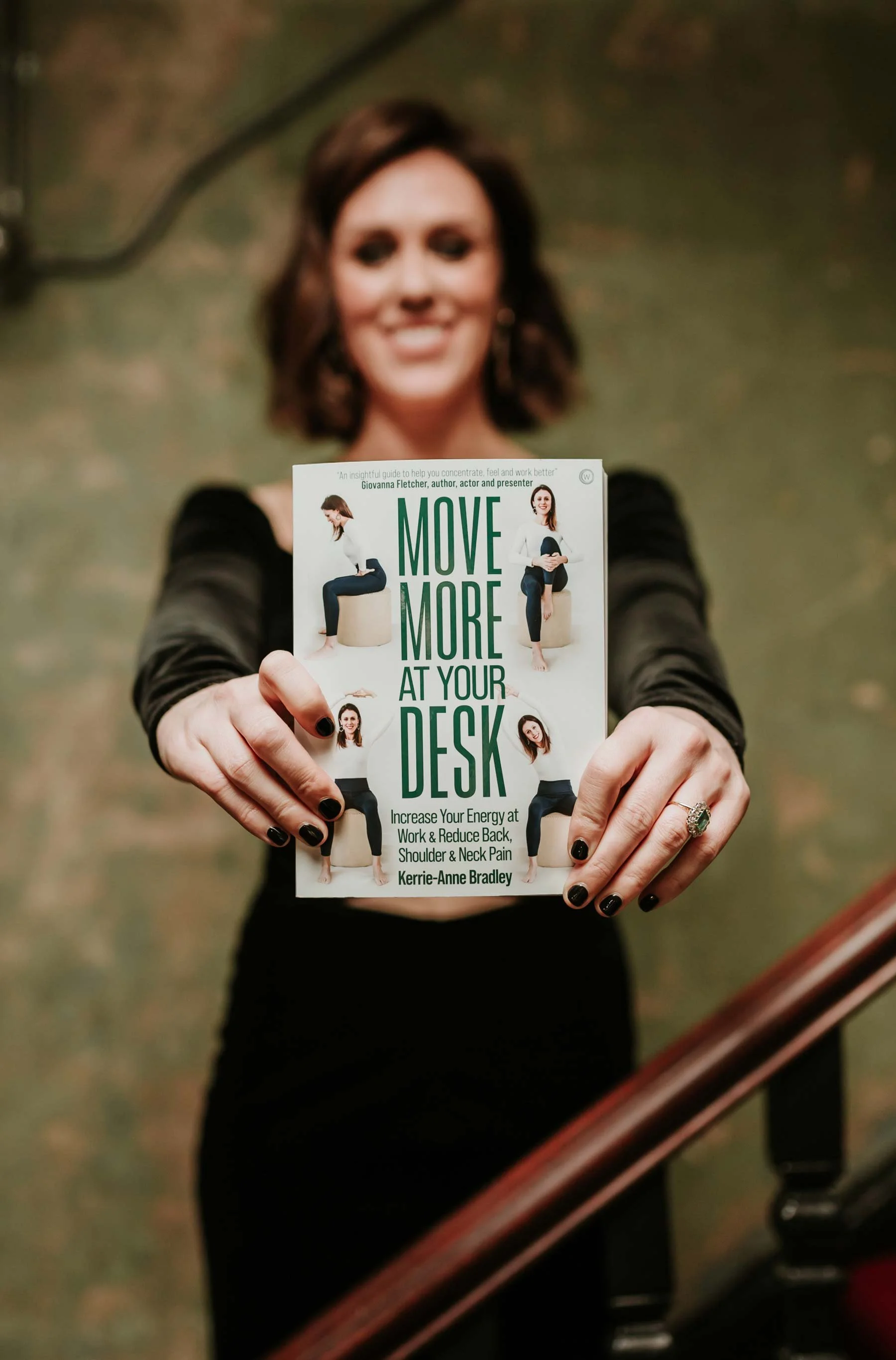
Move More At Your Desk
Published by Watkins Publishing, this is the practical guide to moving more throughout your working day — whatever your desk setup, schedule, or starting point. It's used by HR teams building workplace wellbeing programmes and by individuals who want to understand what sitting is doing to their body and what to do about it. Available from Amazon.
Kind words from individuals and movement experts on how the book has helped them
-
![A man in a dark jacket and glasses stands outdoors with a camera, surrounded by green foliage.]()
"Kerrie-Anne’s tremendous energy and knowledge really come through in this book. Showing us all that we don’t need a mat or long periods of time to move well and benefit from it. A great resource for all of us as we sit more!"
MOVER
-
![Black background with the word 'JON' written in white in the center.]()
“As a physio and Pilates instructor I absolutely love this book. The importance of movement, of all parts of the body, in all the different directions it is supposed to move is vital. So many people I see simply don’t move enough. Walking for exercise isn’t enough, the government guidelines tell us this."
PHYSIOTHERAPIST & PILATES TEACHER
-
![A black and white photograph of a vintage typewriter with a sheet of paper inserted.]()
“This book is absolutely packed with knowledge and information on Pilates and is super easy to follow with photos to see if you’ve got your positioning right etc! It can sit perfectly on your desk too giving you the initiative to move and get a stretch in! Absolute WIN if you ask me!”
MOVER
-
![A red stop sign with white letters and a blue sky in the background.]()
“As a Pilates teacher I am always encouraging my clients to move more but when they come to a weekly class sometimes they feel this means too much time commitment. This book is full of great ways to move more day to day and I will definitely be using lots of the ideas both for myself and my clients! It’s super easy to dip in and out of and everything is explained so clearly. Highly recommend for everyone!”
PILATES TEACHER

Move with me
Let’s get you (and your people) moving.
-
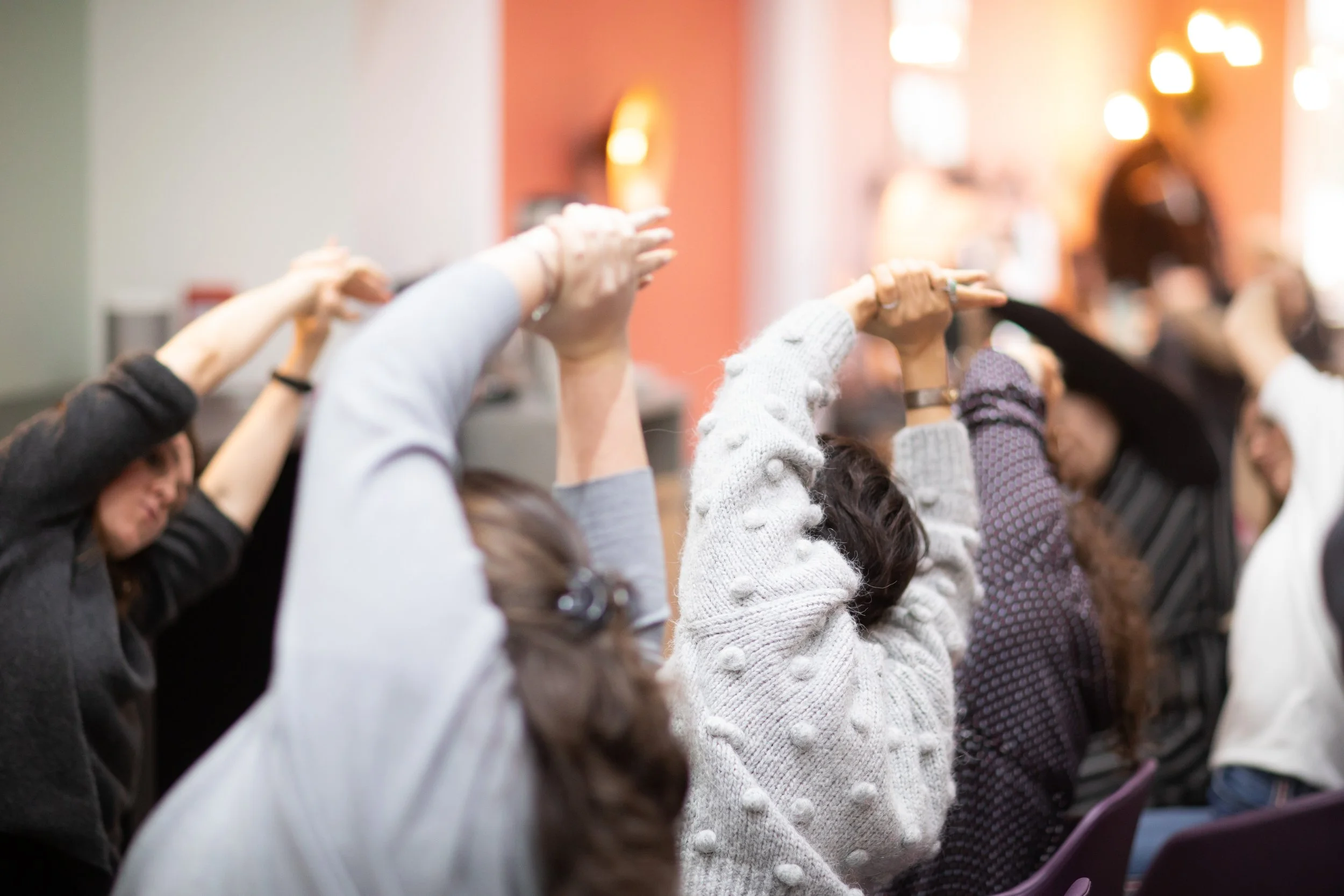
For Businesses
Wellbeing movement workshops, MSK programmes and annual programmes.
-

For Yourself
Five live mat Pilates and desk-based classes a week. A huge library of bitesize desk exercise, recorded live mat Pilates classes, and a weekly newsletter reminding you to move.
READ THE BLOG